You’ve probably stood in an outdoor store staring at a wall of hiking boots, wondering why some cost $100 while others push $400. The difference isn’t just marketing hype.
Your choice needs to match three specific factors: the terrain you’ll tackle, how much weight you’re carrying, and how many miles you plan to cover. Pick wrong, and you’ll deal with blisters, ankle rolls, or wet feet within the first few hours on trail.
Which Hiking Footwear Type Fits Your Terrain and Style?
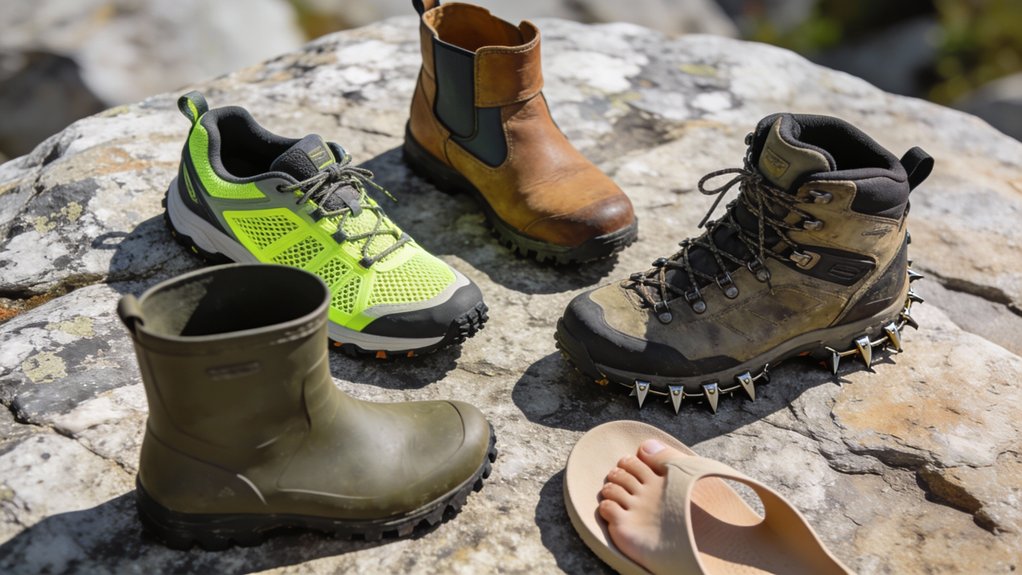
How do you match your boots to the trails you’ll actually hike?
Trail running shoes work best on maintained paths, weighing just 0.45 kg with superior shoe breathability and zero break-in time.
For well-groomed trails, trail runners offer unmatched lightweight performance at under half a kilogram with instant comfort.
Hiking shoes balance flexibility and durability at 0.71-1 kg, handling rugged terrain without excess bulk.
Backpacking boots deliver essential support for rough trails at 0.9-1.4 kg, with waterproof protection for unpredictable weather.
Mountain boots provide maximum ankle support and insulation for winter conditions, though they’re the heaviest option.
Proper layering systems also enhance comfort by regulating moisture and temperature around your feet during extended hikes.
Your choice depends on three factors: the terrain you’ll encounter, how much weight you’re willing to carry, and your personal support requirements.
Full-Grain Leather vs Synthetic Hiking Boots: Weight, Durability, and Break-In Time
When you’re weighing full-grain leather against synthetic boots, you’re really choosing between old-school durability and modern convenience.
Full grain benefits include exceptional longevity and natural waterproofing, but you’ll carry 1.5 kg or more per boot and endure weeks of break-in pain.
Synthetic advantages shine through lighter weight, 0.9 to 1.4 kg, and immediate comfort out of the box. They’re more breathable too, perfect for warm-weather treks.
However, synthetics typically last 900 to 1200 miles before wearing out.
Leather’s poor breathability makes your feet sweat, while its weight drains energy on extended trips.
Proper hiking boots are essential for preventing injuries on uneven terrain, so prioritize personal comfort when making your selection.
Choose based on your priorities.
What Ankle Support Do You Need: High Top, Mid, or Low Cut?
Your ankle height choice matters more than most hikers realize, affecting everything from trail stability to end-of-day fatigue.
Match your boot to the terrain you’ll actually explore:
- High tops lock your ankles for rocky trails and heavy packs (30+ pounds)
- Mid-cuts balance support and freedom for moderate terrain
- Low-cuts maximize mobility on maintained paths and day hikes
- Personal comfort trumps conventional wisdom: some experienced hikers prefer low-cuts everywhere
Ankle height considerations depend on your load weight, trail difficulty, and hiking style.
Test different heights before committing.
Your body knows what works best.
Rigid or Flexible Soles: Matching Traction to Trail Conditions
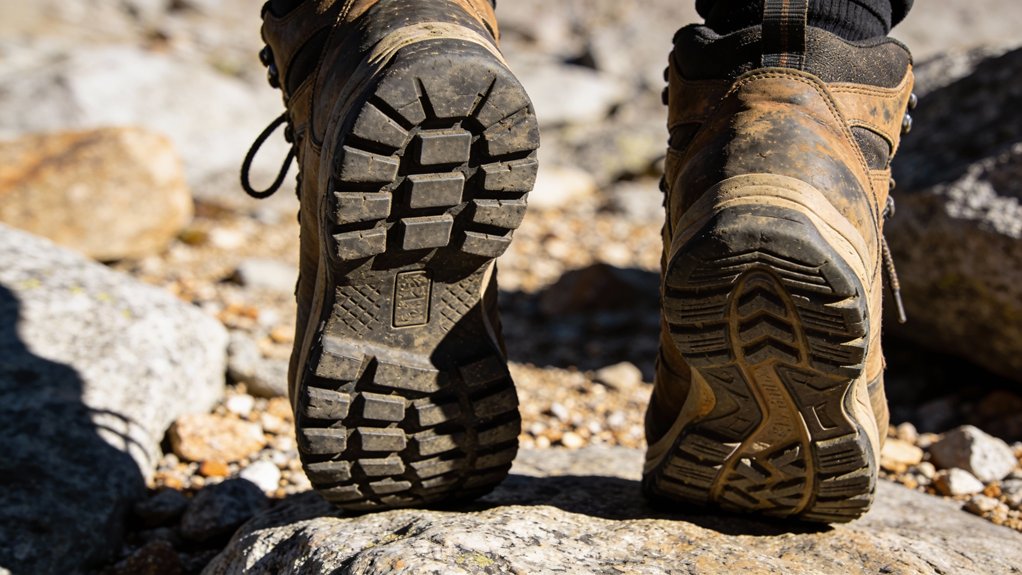
After you’ve locked in the right ankle height, the stiffness beneath your feet determines how your boots handle different ground conditions.
Sole rigidity matters more than you’d think. Flexible soles let your feet move naturally on maintained trails, keeping you light and comfortable for casual day hikes.
Rigid soles excel on rocky, uneven terrain where stability prevents foot fatigue and protects against sharp edges. They’re essential for snow and technical routes.
Different traction types match different environments. The sweet spot depends on where you’ll actually walk: too stiff makes easy paths uncomfortable, while too flexible compromises your footing on challenging ground.
Why Hiking Boots Need a Half-Size Larger (and How to Test Downhill Fit)
Most hikers size their boots wrong because they forget what happens six miles into a trail.
Your feet swell during long hikes, and boots that fit perfectly in-store become torture chambers on descents.
Go half a size up from your regular shoes: it’s not optional if you want freedom from blisters and lost toenails.
Here’s proper fit testing:
- Shop late afternoon when your feet are already swollen
- Wear your actual hiking socks
- Guarantee adequate toe space for wiggling freely
- Walk downhill to check your toes don’t hit the front
Visit a sporting goods store for professional measurement first.
Waterproof Membranes and Breathability: What Materials Work Best?
How well your boots handle moisture determines whether you finish a hike with dry feet or soggy regret.
Gore-Tex and similar waterproof technology create barriers that block external moisture while letting sweat escape.
Here’s the catch: breathability trade offs mean truly waterproof boots trap more heat. In hot climates or during intense scrambles, you’ll sweat more than rain threatens you.
Mesh panels and leather combinations offer better ventilation but less protection.
Your best move? Match your boots to your trails.
Desert hikers need airflow. Pacific Northwest trekkers need sealed membranes. Choose the protection level that matches your freedom to roam.