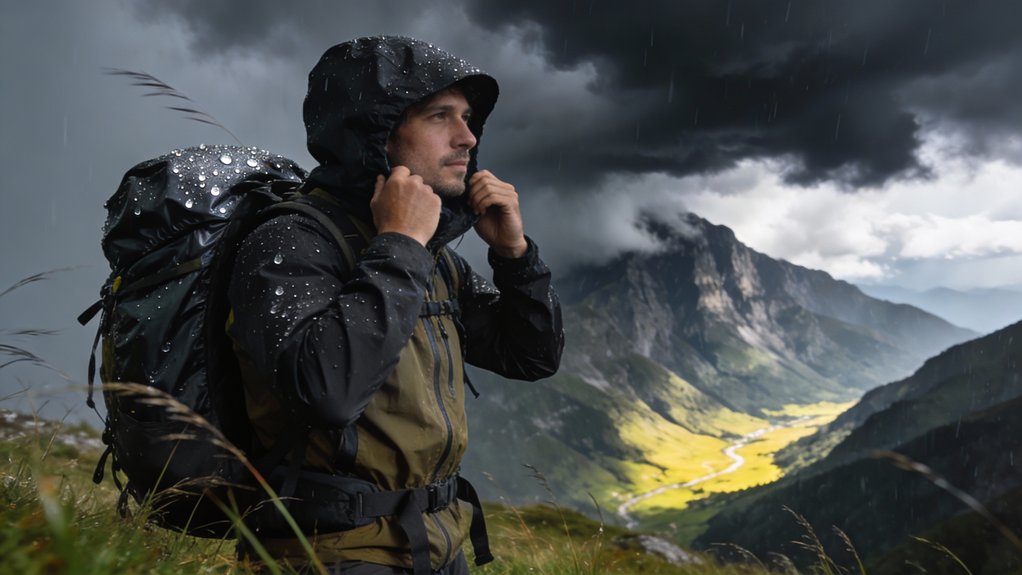
Last summer, a hiker in Colorado’s San Juan Mountains watched clear skies turn to hail and lightning in just twenty minutes, she barely made it below treeline.
Weather on the trail doesn’t follow the patterns you’re used to from home, and mountain conditions shift faster than most people expect.
You’ll need specific skills to recognize warning signs, react appropriately, and know when pushing forward becomes genuinely dangerous. The difference between these responses can determine whether your hike ends as planned or becomes an emergency.
Read the Forecast for Trail Conditions, Not Just Temperature
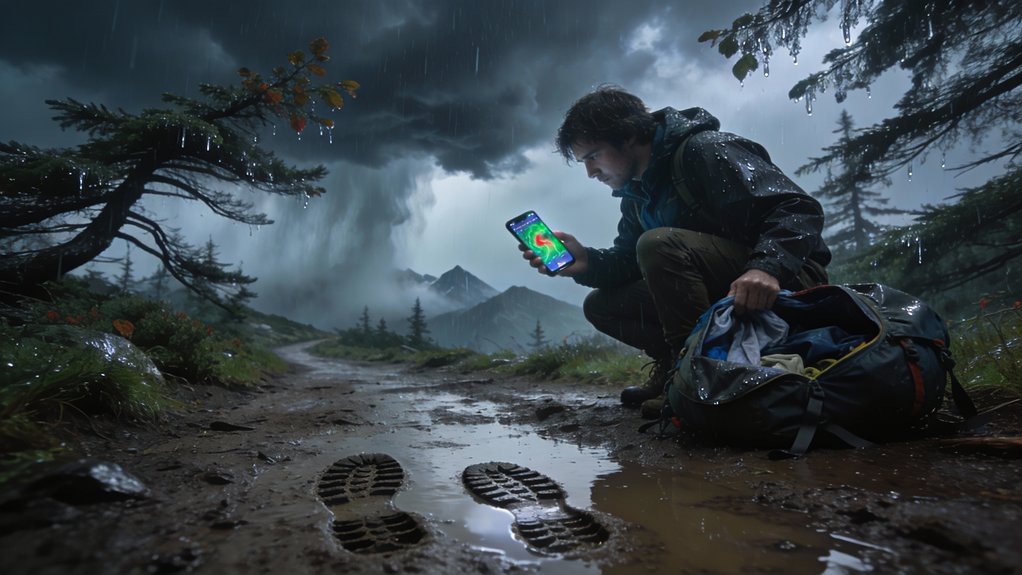
Checking the weather forecast means looking beyond that single temperature number at the top of your phone’s screen. You need the full picture: wind speeds, humidity levels, and precipitation chances.
Local conditions matter more than regional averages, especially when you’re dealing with elevation variations. A 70-degree forecast at the trailhead doesn’t mean much when you’re climbing 3,000 feet higher into cooler zones.
Download weather radar apps that show microclimate patterns along your route. Check storm warnings daily before you head out.
Recent trail reports from hiking forums reveal real-time conditions like mudslides or washed-out sections that forecasts won’t mention.
Spot Early Warning Signs of Dangerous Weather
Nature broadcasts storm warnings hours before weather apps catch up, if you know what signals to watch.
Darkening skies with puffy cumulus clouds signal developing thunderstorms, your cue to seek shelter.
Pay attention to cloud patterns building vertically and insect behavior shifting suddenly. When bees and butterflies vanish, they’re already hiding from what’s coming.
Birds flying low and flowers closing indicate dropping atmospheric pressure. Feel for cooling wind gusts that precede storm activity.
Use the “flash to crash” method: count seconds after lightning. Five seconds equals one mile. If you count fifteen seconds or less, you’re too close. Move now.
Stay Safe When Lightning Threatens the Trail
Lightning kills more hikers than any other weather hazard, so you can’t afford casual mistakes when storm cells move toward your position.
Count seconds between flash and thunder: five seconds means the storm’s one mile out.
At 15 seconds or less, implement lightning safety protocols immediately. Spread out 20 feet from your group to prevent multiple casualties.
Your shelter options matter: avoid tall trees, metal objects, and rock overhangs.
Crouch on insulating material with feet together to minimize ground contact.
Don’t move until 30 minutes pass after the last thunder. That’s your all-clear signal.
Respond to Sudden Rain, Wind, and Temperature Crashes
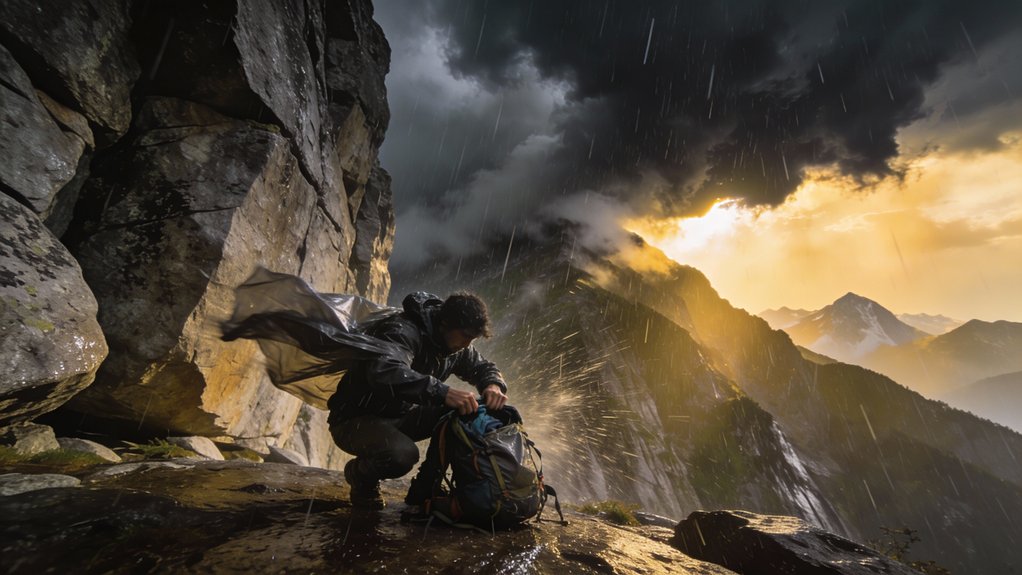
Weather can flip on you in minutes, transforming a comfortable hike into a survival situation. When rain hits, throw on waterproof rain gear immediately: wet clothing strips away body heat fast.
Sturdy boots maintain traction on slick trails. Wind amplifies cold, especially above treeline, so add that insulating layer before you start shivering.
Remember temperatures drop 3.5°F per 1,000 feet gained. If conditions crash hard, seek shelter in forested areas quickly, but stay away from tall trees during lightning.
Keep moisture-wicking socks handy. Your ability to adapt determines whether you’ll ride out the storm comfortably or struggle unnecessarily. During wildfire season, be aware that air quality levels can drop significantly, potentially affecting your respiratory health and requiring you to reconsider your hiking plans.
When to Turn Back: Making the Safety Call
Sometimes adapting to conditions isn’t enough, you need to recognize when the mountain is telling you to leave. Your safety protocols should include clear triggers: thunder within 15 seconds means lightning’s under 3 miles away, turn around.
Watch for rapidly building dark clouds and sudden temperature drops. Strong wind gusts and temperature shifts signal worsening conditions ahead. Proper risk assessment means checking forecasts beforehand and staying flexible with your plans.
If you spot mudslide signs or flooding after heavy rain, don’t hesitate, leave the trail immediately and find higher ground. Summit fever isn’t worth your life. Establish a communication plan with someone at home so others know your expected return time and can alert authorities if you don’t check in.