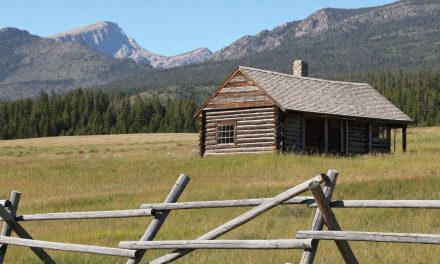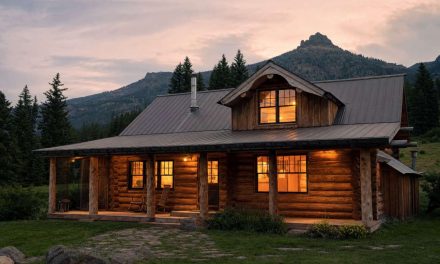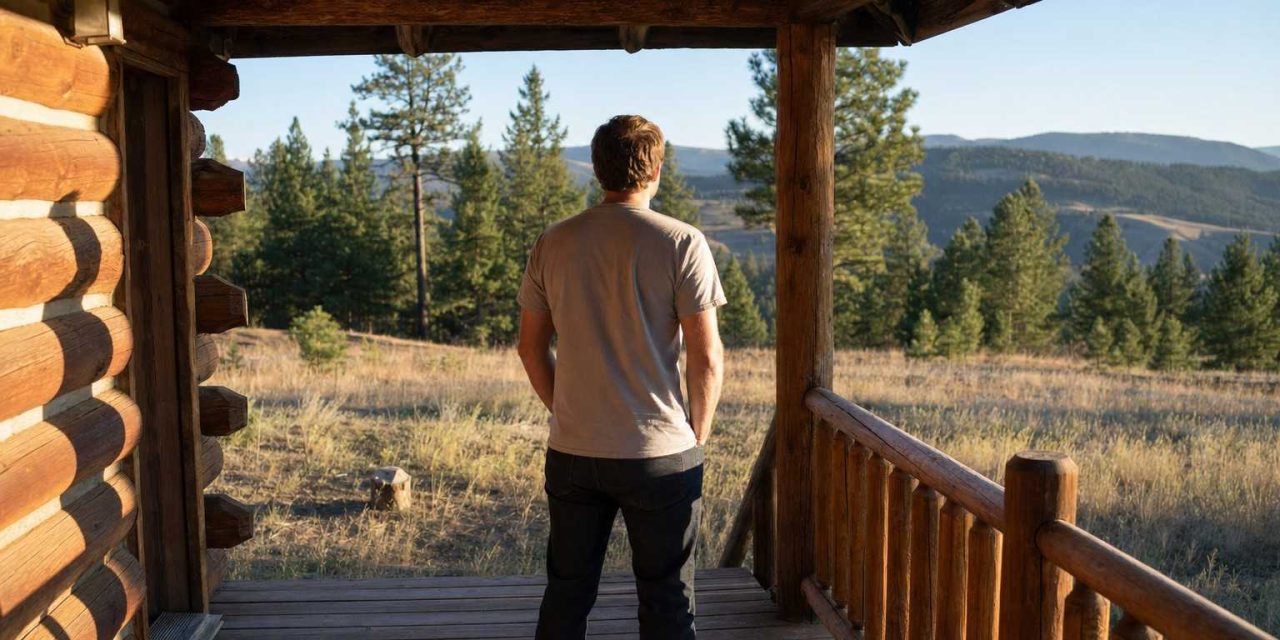
The listing photos look great. The description says “centrally located.” The price seems fair.
Then you arrive and spend the first morning driving forty minutes to the river.
Montana is big and rural, and cabin listings are written to sell, not to set expectations. Most of what matters at the booking stage is not on the page. Here is what we look for before committing.
Start with the drive, not the cabin
The real test is how long it takes to get where you actually came to be. A cabin described as “central” can still be a solid forty minutes from the river access point, the trailhead, or the park entrance you have in mind.
Do not rely on the map thumbnail in the listing. Open a proper route tool, drop a pin on the specific access point, and check the realistic drive time. Montana roads are often slower than the mileage suggests, especially on gravel or in mountain terrain.
If you are coming to fish, this matters most in the morning. The best fishing window on a river like the Big Hole is often early, and you do not want that window eaten by a commute. Our guide to fly fishing cabin trips on the Big Hole River goes into how to pick a base for exactly this reason.
Kitchen quality and grocery reality
Cabin listings almost always mention “full kitchen.” That phrase can mean a two-burner propane stove and a mini fridge, or it can mean a real kitchen with an oven and storage.
Check the kitchen photos specifically, not just the cabin photos. If you plan to cook real meals for a group, look for an actual stove, counter space, and cookware listed in the amenities.
The grocery store situation matters just as much. In southwest Montana, the nearest well-stocked store can be thirty or forty minutes out. In more remote areas it is farther. Plan your supplies before you leave the last town with a real grocery store, not after you arrive.
If you want more context on how the logistics of a Montana stay actually work, our overview of how Montana cabin rentals work covers what to expect before and after you book.
Off-grid realities
Many Montana cabins are genuinely remote, and remote means trade-offs.
Cell service is spotty in a lot of the places you actually want to be. Some cabins have no service at all. If you need to stay connected, for work, for safety, or for keeping in touch, ask the host directly what the situation is. Do not assume a wifi listing means a strong or reliable connection.
Well water is standard in rural Montana. It is usually fine but occasionally has a mineral taste or sulfur smell. Not a problem, but worth knowing.
Some cabins run on a generator or solar system, which means power limits. Ask whether the generator runs overnight or only during certain hours, and whether there are any restrictions on high-draw appliances.
None of these are reasons to avoid a remote cabin. They are things to know ahead of time so you are not surprised by them.
Winter and shoulder-season access
Montana winter access is a real question, not a formality.
Some cabin driveways require four-wheel drive or traction devices when snow is down. Some roads to more remote properties are not maintained at all in winter. A listing that is perfectly reachable in July can be genuinely inaccessible in February without the right vehicle.
If you are booking for a cold-month stay, confirm road and driveway conditions with the host before you pay. Ask what vehicle they recommend and whether the road is plowed. A “yes, the road is maintained” from the host is worth more than anything in the listing description.
Group fit: what the sleeping count hides
Listed sleeping capacity and comfortable sleeping capacity are not the same number.
A listing that sleeps eight might mean two bedrooms with real beds, plus a futon in the living room and a pull-out sofa. That works for some groups and badly for others. Check the actual bed count against the listing’s fine print, not the headline number.
One bathroom for a full house is the most common friction point. If you have a large group with an early morning schedule (fishing, hiking, or a park visit), one bathroom can genuinely back things up.
Pet rules are another place where the listing and the reality can differ. Some hosts allow pets and mean it; others have quiet restrictions on size or number. If you are bringing a dog, confirm it explicitly and check the property perimeter for anything that could be an issue.
Reading the listing honestly
A few patterns in listing copy are worth recognizing.
“Rustic” usually means the cabin is dated and has limited modern conveniences. That is not a negative if you know what you are getting. It becomes a problem when people expect “rustic” to mean “charming and comfortable” rather than “older appliances and no dishwasher.”
Location accuracy varies by platform. Read the listed address against a map, not against the listing’s own description. A listing that describes itself as “near Glacier” might be an hour from the park entrance.
Recent reviews are more useful than the overall rating. Look for mentions of the things that matter to you: the drive, the road condition, the kitchen, the cell service. A cabin with a 4.6 average and three recent reviews about “be prepared, the road is rough” is telling you something the rating does not.
A short checklist before you book
Run through these before committing to any Montana cabin rental.
- Drive time from the listing to your specific access point, not the nearest town.
- Kitchen photos: real stove, real counter space, cookware included.
- Nearest grocery store and how far it is from the cabin.
- Cell service and wifi situation, confirmed with the host.
- Power setup for remote properties: generator hours, any restrictions.
- Winter road and driveway access, if booking outside of summer.
- Actual bed count versus sleeping capacity headline.
- Bathroom count relative to group size.
- Pet policy confirmed in writing if you are bringing a dog.
- Recent reviews filtered to the things that will affect your trip.
Montana cabin rentals reward a bit of upfront research. The cabins that look average on the listing page and get five-star reviews are usually the ones where the host described it honestly. That alignment between expectation and reality is what makes a trip work, and it is mostly visible in the listing if you know what to look for.
For a broader look at the types of stays available, see our comparison of cabin, lodge, and rental options in Montana. And if this is your first time booking around a fishing trip, our first Montana fly fishing cabin trip primer walks through the practical side from the start.