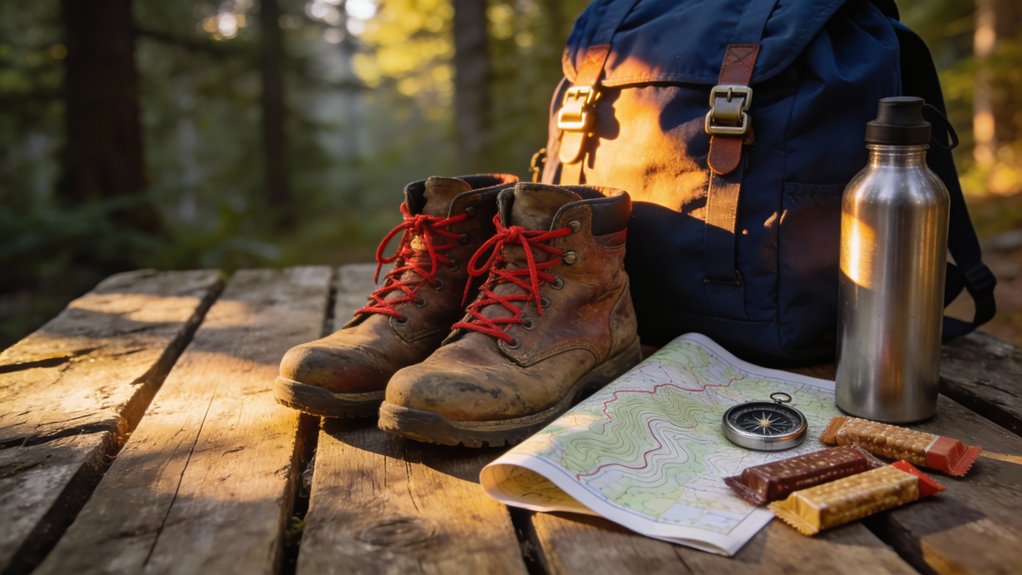
You don’t need expensive gear or peak fitness to start hiking, just a pair of decent shoes and the willingness to walk farther than usual.
Most beginners make the same mistake: they pick trails that are too difficult, pack way too much stuff, and burn out after one exhausting trip.
The real secret to becoming a hiker isn’t about conquering mountains on day one. It’s about understanding a few practical basics that’ll keep you coming back.
Start With Clothes and Shoes You Already Own

You don’t need to drop hundreds of dollars on specialized gear before hitting your first trail. Your breathable workout clothes work perfectly fine: they’ll manage sweat and keep you moving comfortably.
Those sneakers or athletic shoes with decent support? They’re sufficient for beginner trails.
Focus on layering techniques using long-sleeve shirts and lightweight jackets you already own to adapt to weather changes. Understanding proper layering systems will help you stay comfortable as temperatures fluctuate throughout your hike.
Dig through your drawer for merino wool socks: they’re ideal for moisture management and blister prevention.
That old rain jacket or windbreaker? It’ll keep you dry when conditions shift unexpectedly.
Start with what you’ve got.
Know What Hiking Actually Feels Like Before You Go
Having the right clothes matters, but understanding the physical reality of hiking matters more.
You’ll experience distinct hiking sensations that differ from your gym routine or neighborhood walks. Nature’s impact extends beyond pretty views, it’ll challenge your body and clear your mind.
Here’s what to expect:
- Cardio strain increases on inclines, requiring 30-second breaks every 10-15 minutes
- Leg muscles burn differently than running, especially your calves and quads on descents
- Mental fatigue lifts after 20 minutes outdoors, replaced by surprising energy
Test a short trail first. Your body adapts quickly once you know what’s coming. Before heading out, research hiking locations to find beginner-friendly options that match your fitness level.
Find Beginner-Friendly Trails Using AllTrails
Once you’re ready to pick your first trail, AllTrails becomes your most practical planning tool. Filter searches by distance and difficulty to match your current fitness level.
Start with AllTrails’ filters to find beginner-friendly hikes that match your current abilities and build confidence gradually.
The app shows elevation gain for each hike, so you’ll know exactly what you’re getting into.
Trail selection tips include checking recent user reviews insights for current conditions like mud or snow. Photos from other hikers reveal what the terrain actually looks like.
The GPS tracking keeps you on course without restricting your exploration.
Save promising trails to custom lists and build your hiking repertoire at your own pace.
Get in Hiking Shape With Short Daily Walks

Building your hiking fitness doesn’t require a gym membership or complicated training plan.
Start with 15-30 minute walks around your neighborhood to build stamina naturally. The key is consistency and gradual progression:
- Increase walking duration by 10% weekly to avoid injury while building endurance.
- Add terrain variety by seeking out hills, uneven sidewalks, or local trails that mimic hiking conditions.
- Track your progress with a fitness app to stay motivated and hit distance goals.
Wear supportive shoes to prevent blisters.
These short daily sessions strengthen your legs, improve balance, and prepare you for longer adventures without complicated schedules.
Pack Only These 5 Essentials for Your First Hike
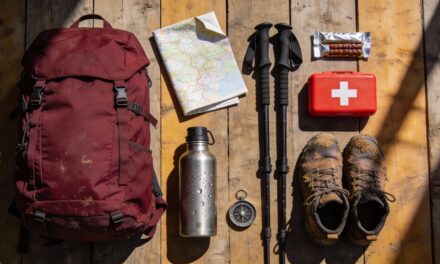
While experienced hikers carry dozens of specialized items, your first outing requires just five key pieces of gear.
Start with backpack fitting: choose one with hip belt and chest strap to distribute weight properly.
Add a waterproof jacket for weather protection, then pack essential snacks like energy bars and trail mix to fuel your trek.
Include a basic first aid kit with band-aids, antiseptic wipes, and pain relievers.
Finally, bring your fully charged phone with a portable power bank for navigation and emergencies.
These five items give you everything needed without weighing you down.
Hike Alone or Join a Group: Pros and Cons
Before you hit the trail, you’ll need to decide whether to go solo or find hiking companions. Each option shapes your experience differently.
Solo hiking gives you:
- Complete control over your pace and route choices
- Deep personal reflection and genuine solitude in nature
- Self-reliance that builds confidence with each mile
Group dynamics offer:
- Shared navigation responsibilities that increase safety
- Motivation during tough climbs and challenging terrain
- Social connections and learning opportunities from experienced hikers
The solo experience provides unmatched freedom.
Solo hiking strips away social obligations and schedules, letting you move at your own rhythm and change plans on impulse.
Group hikes require compromise but deliver support.
Your personality and goals determine which approach fits best.
Go at Your Own Pace and Take Breaks Freely
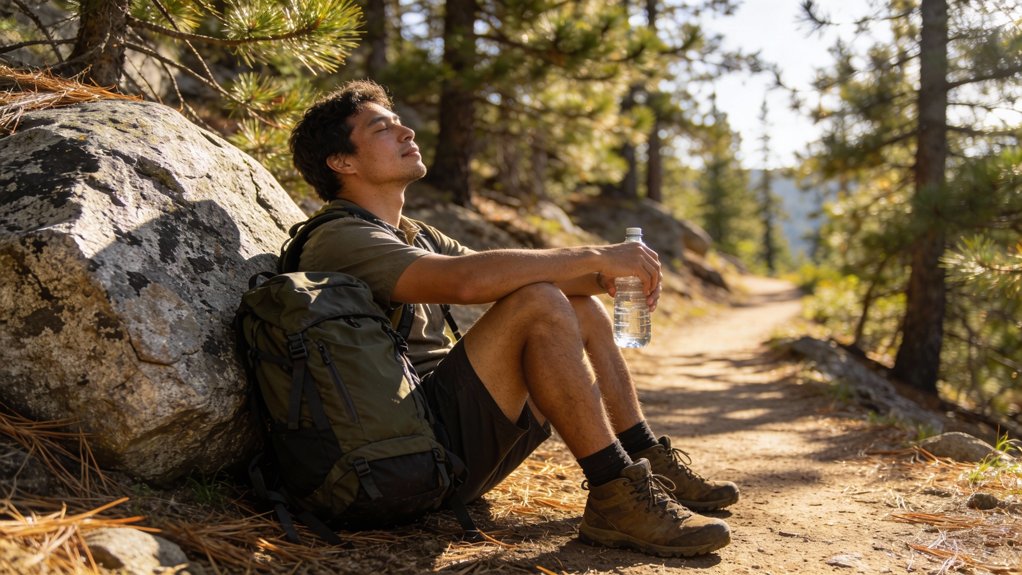
Once you’ve chosen your trail, forget everything you’ve learned about keeping pace with others. Hiking isn’t a race, and your personal comfort matters more than matching someone else’s stride.
Stop whenever you want, every 15 minutes or every hour, whatever feels right. These breaks let your muscles recover, keep you hydrated, and give you time for trail exploration.
Notice that interesting rock formation? Check it out. Feeling winded on a steep section? Slow down without guilt.
Your body knows what it needs better than any hiking schedule. The journey’s yours to control, so take it at your speed.
Make Hiking a Habit by Starting Small and Going Often
Building a hiking habit works the same way you’d approach any new skill: start small and repeat often.
Smart trail selection means choosing flat routes under 5 miles initially. You’ll build confidence without burning out, keeping that sense of freedom alive.
Start with easy, short trails to build lasting confidence and avoid early burnout on your hiking journey.
Your hiking routine needs consistency more than intensity:
- Hit trails weekly at minimum, local parks work perfectly and cut travel time
- Track each outing with apps or journals to watch your progress stack up
- Find hiking partners through groups or communities for accountability and shared adventures
Frequency beats distance when you’re starting. Three short hikes outperform one ambitious trek that leaves you dreading the next one.