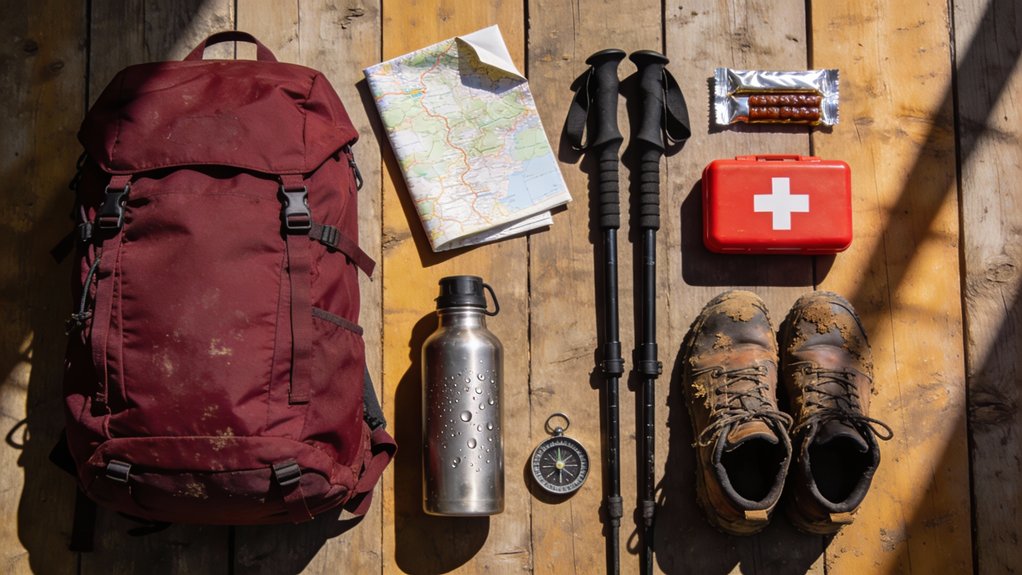
You’ve checked the weather, picked your trail, and laced up your boots, but here’s where most hikers mess up. They either pack like they’re moving to the mountains or show up with nothing but a water bottle and optimism.
The sweet spot sits right in the middle, and it’s built around a framework that’s kept hikers safe for decades.
Let’s break down what actually belongs in your pack.
The 10 Essentials Framework: What to Pack for a Day Hike
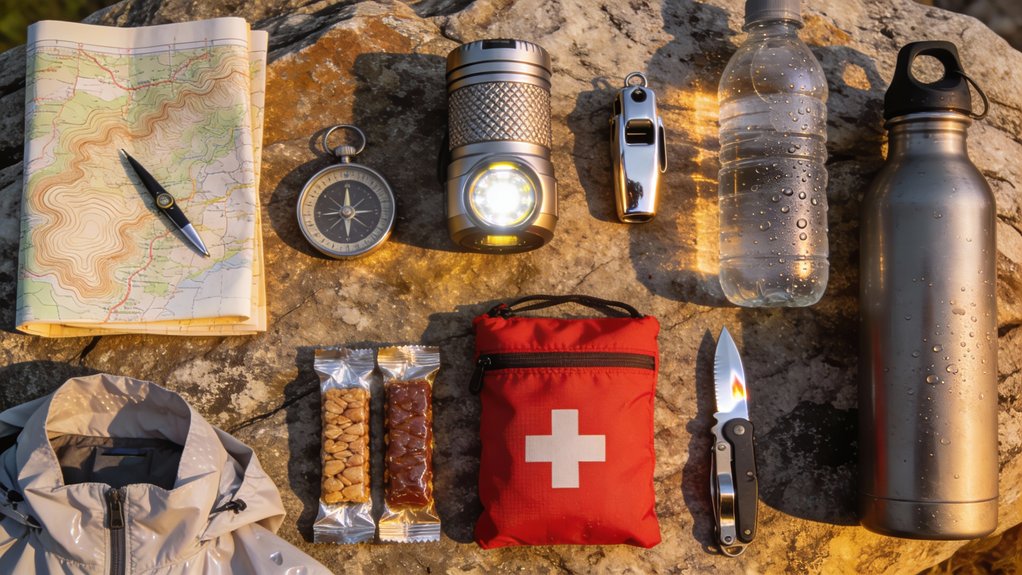
Every hike needs a solid foundation of gear, and that’s where the 10 Essentials framework comes in. This time-tested approach to gear selection keeps you prepared without weighing you down.
The 10 Essentials framework strikes the perfect balance between trail preparedness and pack weight freedom.
You’ll pack navigation tools like a map and compass, sun protection including sunglasses and sunscreen, insulation layers such as a puffy jacket, and emergency items like a headlamp and bivvy.
Don’t forget hydration supplies: water and a filtration system are non-negotiable.
These packing tips guarantee you’re ready for whatever the trail throws at you, from sudden weather changes to unexpected detours, while maintaining the freedom to explore confidently. Remember to also bring bug spray and sunblock, especially during peak sun hours when insects are most active and UV exposure is strongest.
Navigation Tools: GPS Apps and Downloadable Offline Maps
Among your navigation tools, modern GPS apps have transformed how hikers explore trails, and you’ll want at least one downloaded before you leave home.
Apps like Onyx Backcountry let you search nearby trails by location, difficulty rating, and distance.
The GPS features you’ll actually use include:
- Offline maps that work without cell service in remote areas
- Elevation profiles showing total mileage and gain/loss
- Detailed trail overviews for better planning
- Location sharing so friends can track your route
Consider carrying a satellite messenger like the Garmin inReach Mini 2 for two-way communication and weather updates.
Sun Protection Essentials for All-Day Hiking
While navigation tools help you find your way, sun protection keeps your skin and eyes safe during hours of exposure on exposed ridgelines and open trails.
Pack a wide-brimmed hat that shields your face and neck from direct sunlight. Apply SPF 30 or higher sunscreen every two hours, especially after sweating.
Long-sleeved sun hoodies offer coverage without overheating you. Polarized sunglasses with UV protection prevent eye damage and reduce glare.
Consider UV-protective clothing that blocks up to 98% of harmful rays.
Proper sun protection and UV safety practices let you explore freely without worrying about sunburn or long-term skin damage.
Insulation and Clothing Layers for Changing Conditions
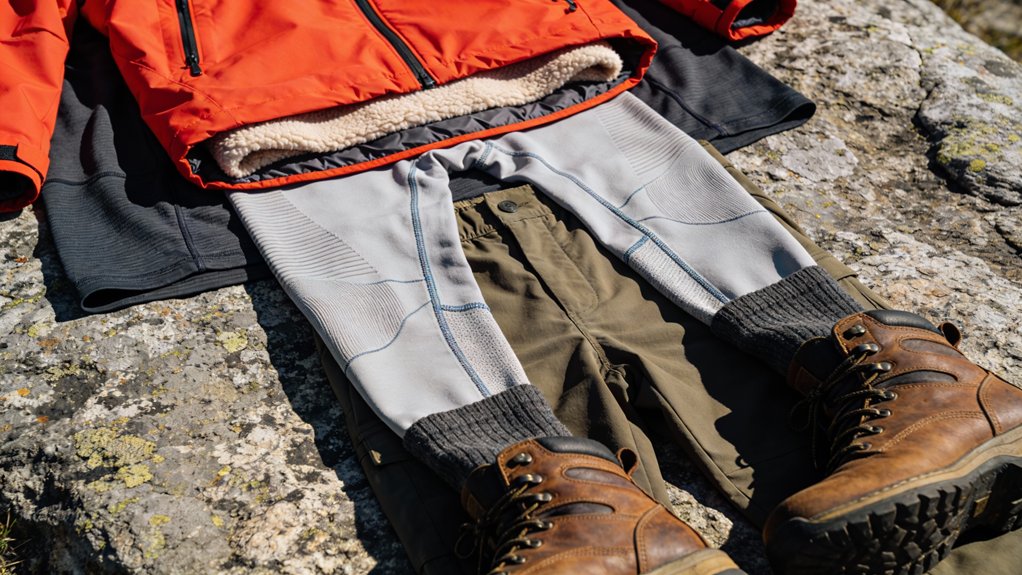
Insulation and Clothing Layers for Changing Conditions
Because mountain weather shifts quickly, you’ll need a flexible layering system that adapts throughout your hike.
Smart layering techniques let you regulate temperature without hauling unnecessary weight.
Start with a moisture-wicking base layer, add a fleece or puffy jacket for warmth, and top it with a rain jacket for wind and rain protection.
Understanding fabric choices helps you select materials that balance breathability, durability, and weight for optimal comfort on the trail.
Your essential clothing setup:
- Trekking pants for cooler fall conditions, they’re warm yet flexible
- Breathable sun hoodie for layering during temperature swings
- Quality hiking socks like Darn Tough to prevent blisters, plus one extra pair
- Additional insulation for evening drops and higher elevations
Pack versatile insulation materials you can easily shed or add.
Headlamps and Illumination: Why You Need Light on Day Hikes
Your layering system keeps you comfortable during the hike, but you’ll also need reliable lighting once the sun starts dropping toward the horizon. A quality headlamp weighs just 2-3 ounces yet delivers the freedom to move with both hands available.
Modern headlamp features include adjustable brightness settings that stretch battery life from 3 to 100 hours depending on your needs. The illumination benefits extend beyond trail navigation: you can signal for emergency help or set up camp efficiently.
Pack one with rechargeable batteries or standard AA cells. Even short day hikes can run late, and darkness arrives faster than you’d expect in canyons or thick forest.
First Aid Kit Basics for Day Hikes
Even minor injuries can derail your day hike if you can’t treat them properly on the trail.
A well-stocked first aid kit gives you the freedom to handle problems without cutting your adventure short.
Include these essentials for injury prevention and treatment:
- Adhesive bandages in multiple sizes, antiseptic wipes, gauze pads, and medical tape for cuts and scrapes
- Scissors for cutting tape or clothing during emergencies
- Instant cold pack and pain relievers like ibuprofen for sprains and strains
- First aid manual explaining common trail injuries
Check your kit regularly and replace expired items before each hike.
Emergency Repair Tools and Gear Fixes for the Trail
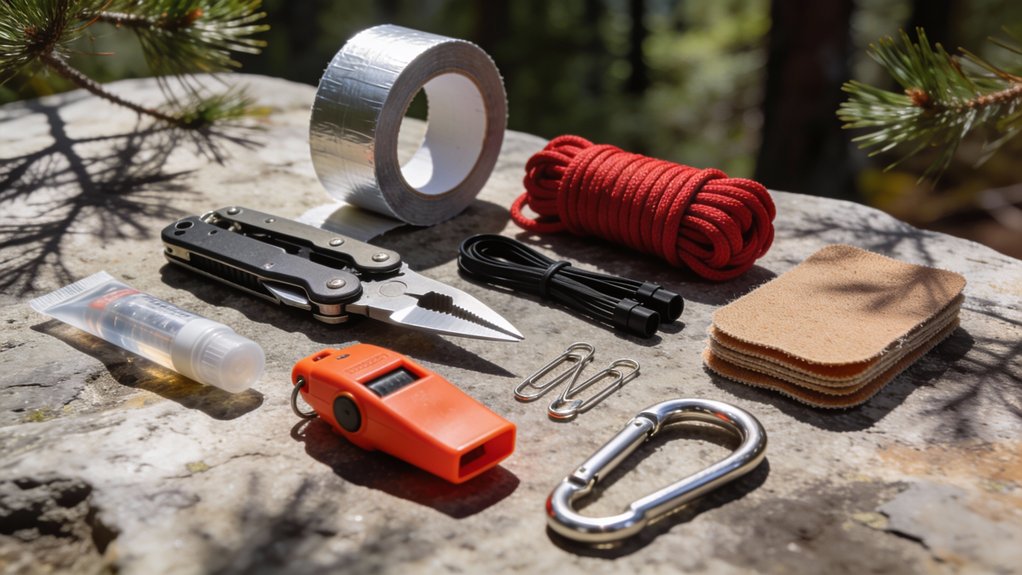
When something breaks on the trail, you can’t just walk to the nearest store for a replacement. That’s why proper gear maintenance starts with carrying a repair kit.
Pack duct tape, a multi-tool, and spare parts to handle common trail mishaps. Your headlamp provides illumination after sunset and works for emergency signaling. Include a water filtration system with a dirty water bag for safe drinking access.
An emergency bivvy offers shelter when weather turns unexpectedly. Learn basic fixes before you go, patching torn backpacks or repairing broken tent poles.
These skills keep you self-reliant when problems arise.
Water and Hydration: How Much to Carry and How to Filter
Water weighs about 2.2 pounds per liter, so carrying enough means balancing safety against hauling unnecessary weight.
Balance hydration needs with pack weight—every liter adds over two pounds to your load on the trail.
Smart hydration strategies keep you moving without turning into a pack mule.
Start with 2 liters minimum per person, but adjust for heat and terrain.
Essential hydration practices:
- Drink 0.5 to 1 liter per hour based on exertion level
- Scout water sources along your route beforehand
- Pack a filter system with dirty water bag for refills
- Carry extra water during warm months when sources run dry
You’ll maintain freedom to roam farther when you’ve planned your water supply properly.
High-Energy Snacks and Trail Food for Day Hikes
Your body burns through calories at 3-5 times the normal rate during moderate hiking, which means that granola bar you packed won’t cut it for a full day on the trail.
You’ll need a combination of quick carbs and sustained protein.
Energy bar options like Clif Bars or homemade versions work well, while trail mix recipes combining nuts, seeds, and dried fruit deliver 150-200 calories per quarter cup.
Pack jerky for protein, whole grain crackers with nut butter packets, and dehydrated fruit for vitamins.
Don’t forget electrolyte tablets to replace salts you’ll sweat out during those climbs.
Pack Organization: Where to Store Gear for Quick Access
Since every second you spend digging through your pack is time you’re not enjoying the trail, smart organization matters more than most hikers realize.
Strategic use of pack compartments transforms gear accessibility from frustrating to effortless.
Here’s your quick-access setup:
- External mesh pockets: Water bottles and snacks stay within arm’s reach
- Top flap and side pockets: Headlamp and small essentials for immediate retrieval
- Dedicated compartment: First aid kit and toiletries isolated for emergencies
- Fanny pack: Wallet, phone, and camera separate from main storage
Store extra layers like your puffy jacket near the top of your main compartment for temperature changes.