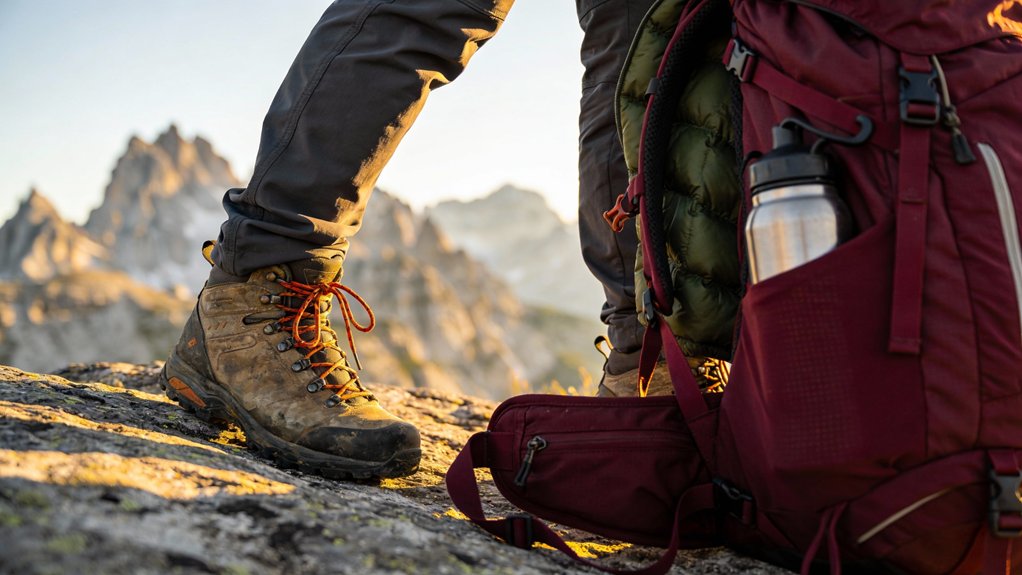
Choosing the wrong hiking clothes feels like driving with the parking brake on: you’ll move forward, but everything’s harder than it should be. You don’t need specialized gear for every trail, but a few smart choices make the difference between comfort and misery.
The right base layer keeps you dry, proper pants protect your legs, and layering options help you adapt when temperatures shift.
Here’s what actually works on the trail and why it matters.
Hiking Base Layers: What to Wear Next to Your Skin
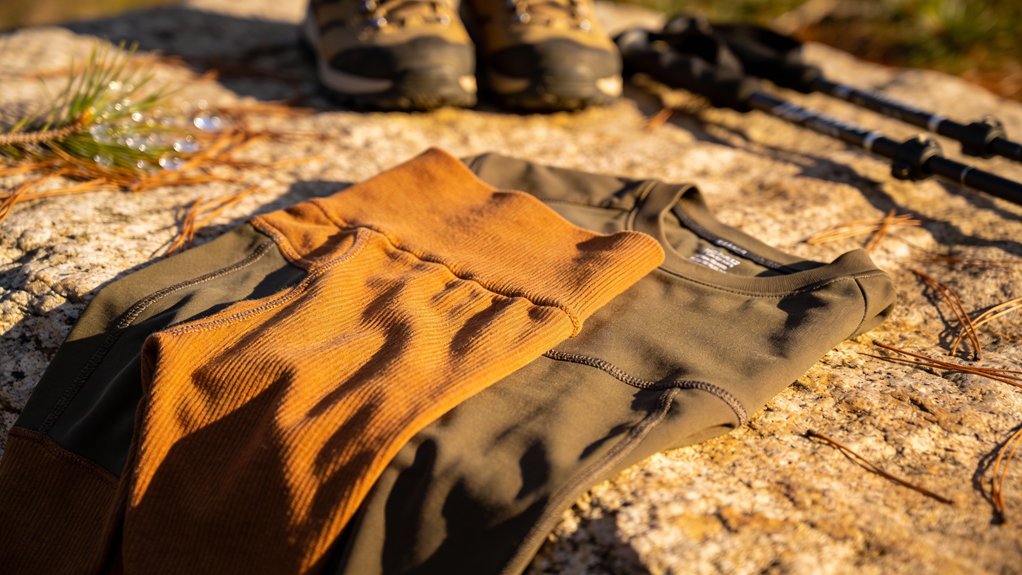
When you’re hiking, what touches your skin matters more than most people realize. Your base layer creates the foundation for comfort on any trail.
Choose synthetic fabrics or merino wool, both excel at moisture management, pulling sweat away from your body while you move. Skip cotton entirely. It traps moisture against your skin, leaving you clammy in summer and dangerously cold in winter.
Base layer benefits include temperature regulation and chafe prevention. Go with synthetic underwear for warm-weather treks and lightweight long-sleeve tops that breathe.
Prioritize flexible fits that move with your body without restriction.
Remember to wear comfortable clothing suitable for the specific weather conditions and trail difficulty of your chosen hiking location.
Hiking Pants vs. Shorts: Which to Wear When
Your legs face the trail’s harshest conditions: thorns, ticks, sun exposure, and temperature swings that change by the hour.
Long synthetic pants deliver pants durability against bugs and brush in mild weather while staying breathable.
Hot conditions call for moisture-wicking shorts comfort that maximizes airflow when you’re pushing hard.
Cold hikes demand long pants for warmth, especially with proper layering underneath.
Rain pants over lightweight hiking pants keep you dry and warm in wet weather.
When winter hiking, remember that dressing in layers helps regulate body temperature effectively and prevents hypothermia caused by wet clothing.
Your choice ultimately depends on temperature, terrain, and personal preference: shorts excel in warm climates, while pants protect and insulate in cooler, rougher environments.
What Shirts and Fleeces Work Best on the Trail
Because your upper body generates most of your hiking heat while staying exposed to wind and weather, choosing the right shirt matters more than most beginners realize.
Essential shirt features and fleece materials for trail comfort:
- Long-sleeve synthetic shirts with moisture-wicking polyester or nylon blends keep you dry and offer UPF sun protection.
- Lightweight merino wool regulates temperature naturally while resisting odors on multi-day trips.
- Packable fleece layers add warmth without bulk when temperatures drop.
Look for roll-up sleeves and breathable panels.
These details give you control over ventilation as conditions change throughout your hike.
Waterproof Shells for Rain and Wind Protection
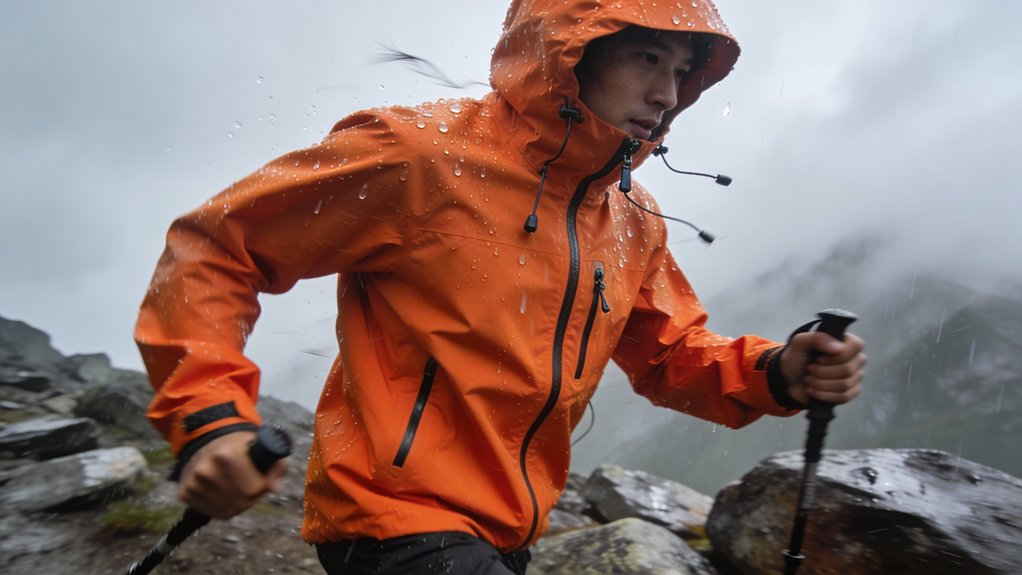
A waterproof shell ranks as your most critical defense layer when weather turns wet or windy on the trail.
Choose shells constructed from breathable waterproof materials with ratings of at least 10,000 mm to handle heavy downpours.
You’ll want adjustable hoods and cuffs that seal out moisture while maintaining your body heat.
Look for ventilation features like underarm zippers to prevent overheating during steep climbs.
The best shells pack down small and weigh under a pound, so you can stash them in your day pack without thinking twice about the extra weight on your back.
Why Cotton Fails on Hiking Trails
Cotton fabric acts like a sponge on the trail, soaking up sweat and moisture until it clings to your skin.
Cotton’s sponge-like fibers trap moisture against your body, creating a clinging wet layer that compromises comfort and safety on the trail.
This creates three critical problems for hikers seeking unrestricted movement:
- Moisture retention leads to chafing: Wet fabric rubbing against skin causes painful blisters during longer treks.
- Lost insulation when temperatures drop: Damp cotton won’t keep you warm, increasing hypothermia risk.
- Slow drying times trap you in wet clothes: Cotton takes hours to dry compared to moisture management fabrics.
Smart hikers choose cotton alternatives like synthetic blends or merino wool that breathe better and regulate body temperature efficiently.
Best Fabrics for Hiking: Synthetic vs. Merino Wool
Once you’ve eliminated cotton from your hiking wardrobe, you’ll face a straightforward choice between two proven fabric technologies.
Synthetic advantages include quick-drying performance, durability, and wallet-friendly prices, perfect when you’re building your trail kit on a budget.
Polyester and nylon wick moisture efficiently in hot, humid conditions.
Merino benefits shine in temperature regulation and natural odor resistance, letting you wear the same shirt for days without offending your hiking partners.
It stays comfortable against your skin and insulates even when damp.
Choose synthetics for warm weather and cost savings, merino for cooler trips and multi-day adventures.
Hiking Socks and Boots That Prevent Blisters
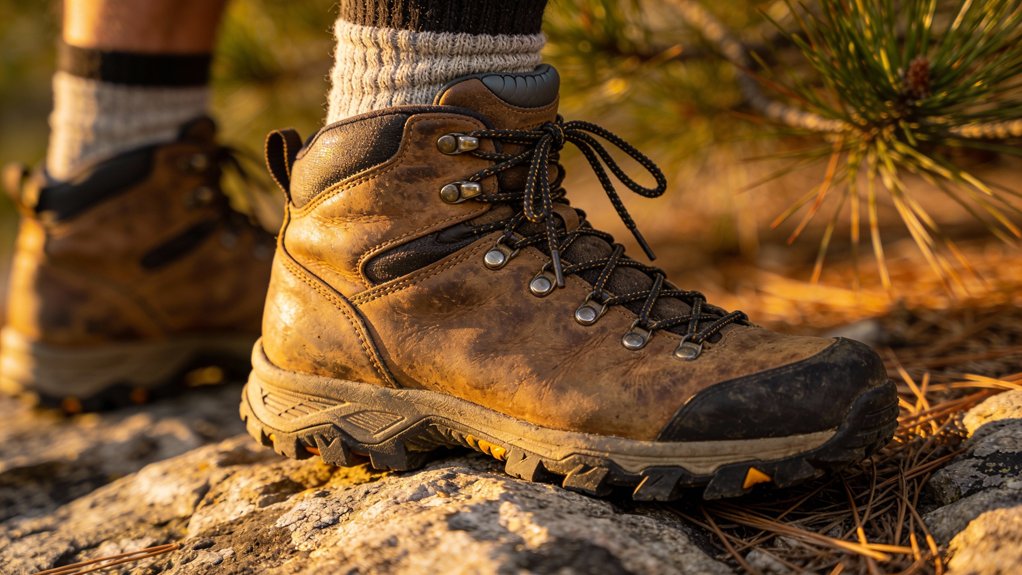
While fabric choice matters for comfort, nothing ruins a hike faster than poorly chosen footwear. Your feet deserve the same attention you give your base layers.
Essential blister prevention strategies:
- Choose proper sock materials: Mid-weight wool socks like Darn Tough provide cushioning and moisture-wicking without excessive bulk that creates friction.
- Prioritize boot fit: Your boots should feel snug but allow toe movement; too tight causes rubbing, too loose creates hot spots.
- Consider trail runners: They’re lighter and dry faster than traditional boots.
Pull your socks up properly to prevent bunching.
Those small wrinkles become painful pressure points fast.
How to Layer Clothing for Changing Trail Conditions
Because mountain weather can shift from blazing sun to cold rain within an hour, you need a clothing system that adapts without forcing you to carry an entire wardrobe.
Smart layering techniques start with a moisture-wicking base that pulls sweat off your skin.
Add a fleece or down mid-layer for temperature management when it’s cold. Top it with a waterproof shell you’ll remove once you warm up.
Dress like it’s 10 degrees warmer than the thermometer shows; you’ll generate plenty of heat moving uphill. Peel off layers before you start sweating, add them back before you get cold.