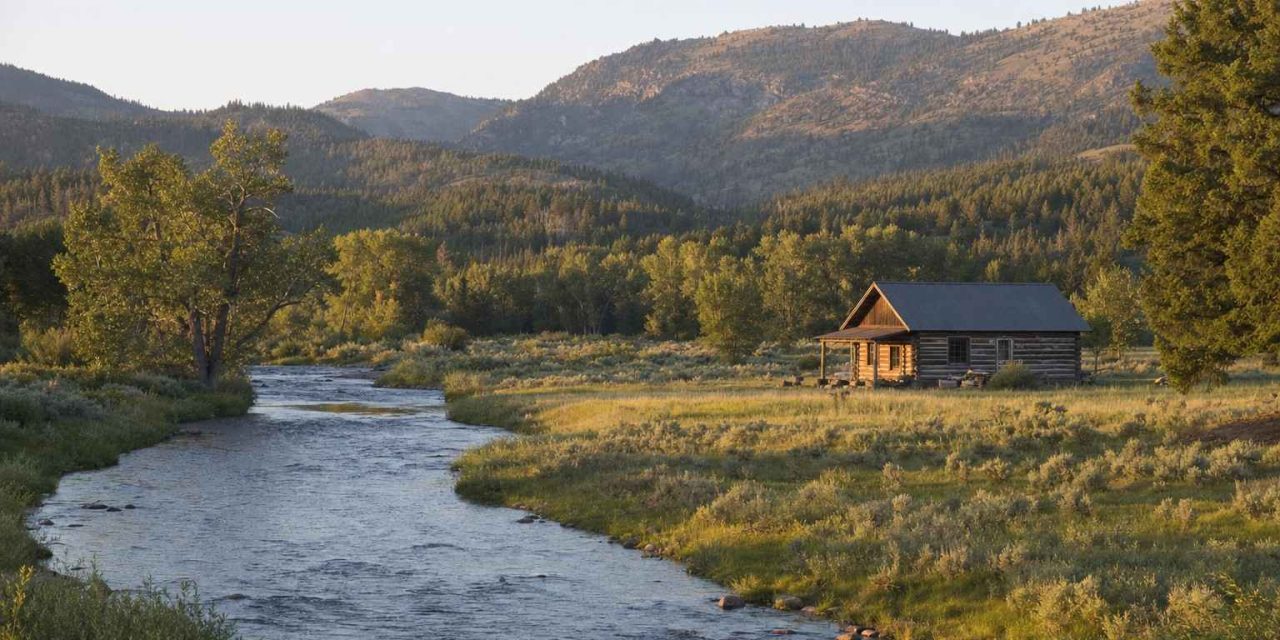
The mistake is almost always the same. People book the cabin first, then work the fishing around it.
On the Big Hole River, that gets it backward.
The Big Hole runs free for more than 150 miles through southwest Montana. It fishes like several different rivers depending on where you stand on it. Where you stay decides which of those rivers you get.
So pick the water first, then find a base near it. Here is how we would choose.
Match your base to the stretch you want to fish
The Big Hole changes character as it drops out of the mountains. Treat it as three broad stretches.
The upper river, near Wisdom, is small, willow-lined, and cold. This is the famous water for native Arctic grayling, a fish rare in the lower forty-eight. It is quiet and remote, with few services.
The middle river, around Wise River and Melrose, is the stretch most anglers picture. Bigger water, strong trout numbers, and the early-summer salmonfly hatch the river is known for. It also has the most places to stay near the water.
The lower river, toward Glen and Twin Bridges, runs warmer and bigger. It fishes well early and late in the season, and it puts you within reach of the Beaverhead and the Jefferson.
Decide which of these you came for. A cabin that suits the upper river can be ninety minutes from the lower river. That drive is your morning.
Know the gateway towns
None of these are big towns. That is part of the appeal, and the thing to plan around. What you trade is convenience for quiet.
- Wisdom puts you on the upper river and the grayling water. Remote, few services, dark skies.
- Wise River sits in the middle of the best-known water, a small hub with cabins and lodges nearby.
- Melrose is the angler’s town on the middle river, right off Interstate 15, with the most rentals close to the water.
- Twin Bridges is the largest base, near three blue-ribbon rivers at once. Best if you want to fish more than the Big Hole.
- Dillon is the nearest town with full services, about forty minutes from the middle river. Good if you want a grocery store more than a streamside porch.
A central-sounding cabin here can still be a long way from where you want to cast. Always check the real drive from the listing to the access point you have in mind.
Time the trip before you book the cabin
On the Big Hole, the week matters more than the cabin.
The salmonfly hatch is the headline event. It usually rolls through the middle river in June, moving upstream as the water warms. It is glorious, and it is crowded.
If that is why you are coming, book months ahead and keep your dates flexible. The hatch does not read a calendar.
Late summer is the opposite risk. When flows drop and water warms, Montana Fish, Wildlife and Parks routinely puts rivers under “hoot owl” restrictions that close fishing from early afternoon to midnight. In bad years it closes stretches outright, and the Big Hole is one of the rivers this hits.
Check current rules with Montana Fish, Wildlife and Parks before you commit to a week in July or August.
You can also watch the river yourself. The USGS gauge on the Big Hole River at Melrose shows live streamflow. Learning to read it tells you more about a trip than any listing photo.
For the full picture, our season-by-season guide to fishing the Big Hole walks the year one window at a time.
What “where to stay” really means here
You have three rough options, and they are a trade-off, not a ranking.
A streamside cabin is the one everyone pictures. It earns its price when it puts you on the water at first light.
A lodge bundles guiding and meals and takes the planning off your hands, for a cost. A rental in town is cheaper and more flexible, and a short morning drive buys you a kitchen and a store nearby.
One habit saves most bad bookings. When you search Vrbo or Airbnb, search by the town nearest the stretch you chose, not by “Big Hole River” alone. Listings stretch that name a long way, so read the location, not the headline.
For a wider look at using the area as a base, see our guide to the Big Hole River valley. For the fishing itself, see our notes on fly fishing the Big Hole and trout fishing in Montana. New to this? Our primer on your first Montana fly fishing cabin trip covers the logistics from license to access point.
How to decide
Work in this order. Pick the stretch, pick the nearest town, check the season, then choose the cabin that gets you to the water fastest.
Do it that way and the Big Hole will feel like it was built for the trip. Do it backward, and you will spend the best hour of every day in the truck.